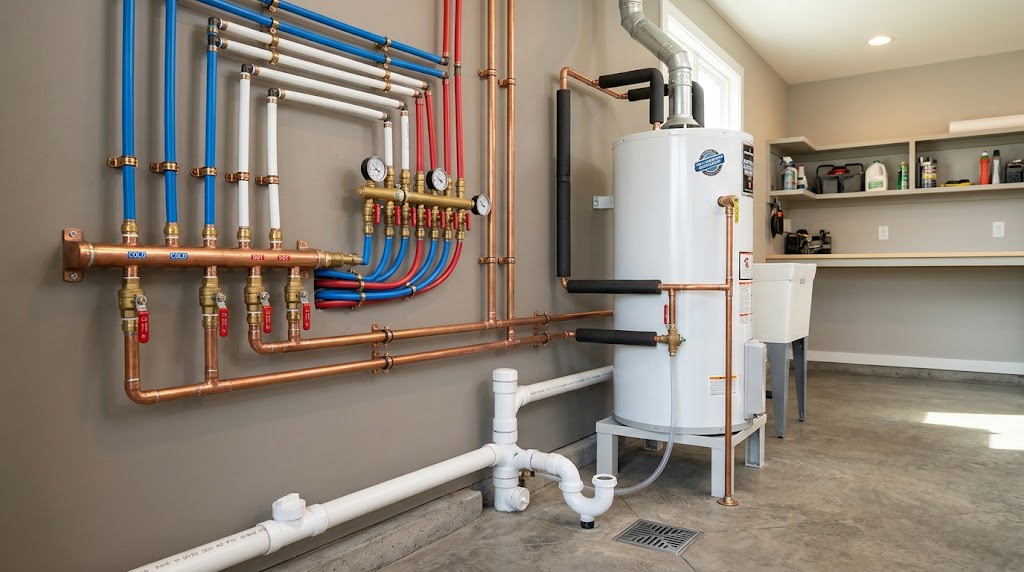
Most New Mexico municipal water supplies draw from deep aquifer limestone formations or mountain runoff with high concentrations of dissolved calcium and magnesium carbonates (150 to over 250 ppm). When heated, these minerals precipitate out of solution and form dense rock-like scale on heating elements and tank bottoms, reducing energy efficiency and causing premature tank failure.
Standard tank water heaters in New Mexico typically last between 8 and 12 years due to mineral stress. If the tank itself is not leaking and only an electric heating element, thermostat, or pressure relief valve has failed, repair is often cost-effective. However, if the tank is corroding or sediment buildup has hardened into the lower shell, replacement is the more economical long-term choice.
At higher elevations like Santa Fe (7,200 ft) or Albuquerque (5,300 ft), atmospheric pressure is lower, causing water to boil at approximately 198°F to 202°F instead of 212°F. Furthermore, thinner air requires proper gas burner de-rating and adequate combustion air supply to avoid dangerous incomplete combustion and carbon monoxide production.
Drains & Sewer Systems
Drains, Clogs & Sewer Laterals
We strongly advise against using caustic chemical drain openers in New Mexico homes. These harsh chemical agents generate intense exothermic heat that can warp PVC pipes, degrade aging cast iron or galvanized joints, and fail to remove solid physical blockages like hair, grease cakes, or invading tree roots.
In New Mexico's arid climate with low indoor relative humidity, plumbing P-traps in rarely used guest bathrooms, floor drains, or laundry sinks can evaporate dry within weeks. When the water seal evaporates, sewer gases enter the home. Running water for 60 seconds into every drain monthly will re-establish the liquid trap barrier.
In desert climates, mature shade trees vigorously seek out underground moisture. Even hairline gaps in vitrified clay or cast iron sewer pipe joints release moisture vapor that attracts tiny feeder roots. Once inside the line, roots expand into dense root masses that snag toilet paper and solid waste, resulting in complete sewer line backups.
Winterization & Leaks
Slab Leaks & Freeze Protection
Key indicators include sudden unexplained jumps in your municipal water bill, localized warm spots on tile or laminate floors, damp carpet or mold growth near baseboards, reduced hot water pressure, and the sound of running water behind walls when all fixtures are turned off.
Before the first hard freeze, shut off the dedicated interior water supply valve feeding your evaporative swamp cooler, disconnect and drain the copper tubing line, and disconnect all exterior hoses from outdoor spigots. If your spigots are not frost-proof sillcocks, install insulated exterior faucet covers to protect the valve body.